
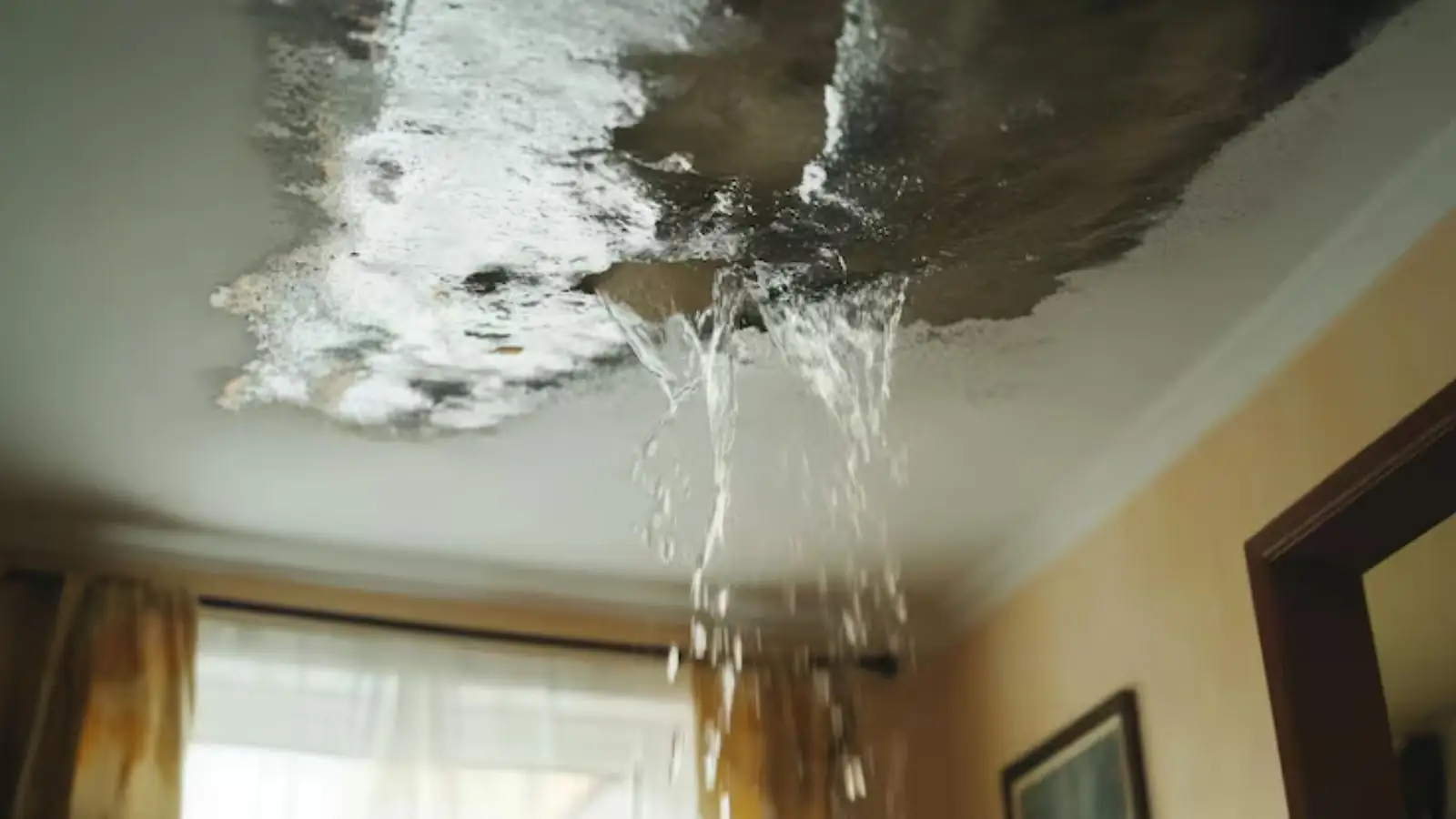
How storm water damage happens to Grapevine homes
Storm water damage in Grapevine, TX usually starts at an opening, not at a pipe. Wind pushes rain sideways through window frames, under door thresholds and past worn garage door seals. Hail can crack a pane or knock a vent cover loose.
Ground-level water is the second route. Clogged gutters dump rain along the foundation line, and a flooded street drain can send runoff toward a door. Wet baseboards and soaked carpet edges follow.
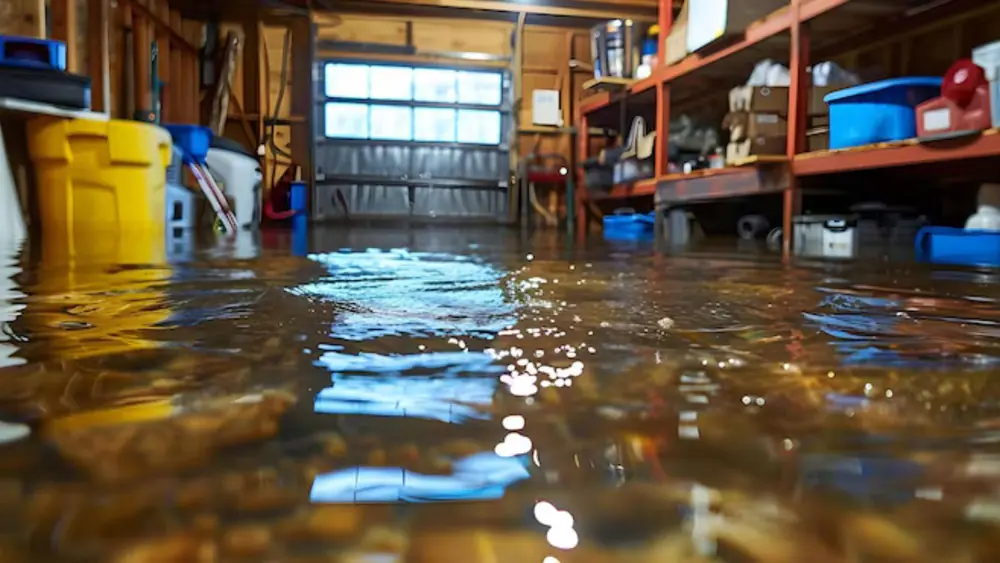
What the water is telling you
Where the water shows up points to how it got in.
| What you see | Likely entry | What it means |
|---|---|---|
| Wet carpet along one exterior wall | Window or door seal | Wind-driven rain has soaked pad and tack strip |
| Puddle just inside the garage door | Worn bottom seal or low threshold | Runoff is reaching the slab and the drywall base |
| Stain below a window sill | Cracked glazing or failed caulk | Water is running down inside the wall cavity |
| Water at several doors at once | Runoff pooling at the foundation | Check whether this is rising water, see flood damage restoration |
| Ceiling stain or drip | Roof entry | See roof leak water damage |
Storm safety steps for the first hour
Weather and wet wiring change the first hour.
- If lightning or wind is still active, stay inside and away from broken glass and downed lines.
- Stay out of any room where water touches outlets, a power strip or the panel, and call the electric utility or 911 for any electrical or gas risk before you call us.
- Cut power to a wet room only from a panel you can reach on dry ground.
- Lift rugs, electronics and paper off wet floors and roll up what you can.
- Photograph every wet surface and the opening where water entered once it is safe to look.
How we dry a building after a storm
The order of work follows the water, starting with what is soaking in right now.
- Extract standing water with submersible pumps or portable extraction units.
- Scan walls and floors with a thermal imaging camera and moisture meters to find wet cavities behind baseboards.
- Pull wet pad, saturated insulation and baseboards that trap water against drywall.
- Set air movers and LGR dehumidifiers, and use drying mats on wet hard flooring.
- Clean surfaces touched by yard or street runoff, since that water may be contaminated.
- Return to re-read moisture until the materials match dry reference readings.
Crews follow the ANSI/IICRC S500 water damage reference standard when sorting clean rain from contaminated runoff. A roofer or window installer repairs the opening itself, and we handle the water inside.
Water coming in during the storm?
Tell the dispatcher which rooms are wet and where it entered. We explain scope and price before work starts.
Power outages, sump pumps and drainage
A storm often takes the power with it, and that is when a sump pump or a basement drain stops working. Picture a pump that quits halfway through a long rain while nobody is home.
If you have a pump or a yard drain, check that it is running once it is safe to walk to it. A dead pump needs a plumber or an electrician, and we handle the water it failed to move. Water that rose from a creek or lake is a different loss, covered in flood damage restoration.
What changes the cost of storm water cleanup
Cost depends on the water category, the area that got wet, the materials involved, the number of drying days and how much has to be torn out. Runoff costs more to handle than clean rain because surfaces need cleaning too.
Scope and price are explained before work starts, so you decide with the numbers in front of you.
Insurance questions after a storm
Coverage often turns on how the water arrived. Rain that came through a storm-damaged opening is treated differently from water that rose from the ground, and standard home policies commonly exclude flood. Check your policy and ask your insurer which category your loss falls into.
Photograph the damage and hold on to damaged items until the adjuster has seen them. We never promise how a claim will be decided.
Grapevine local note: lake, spillway and flood maps
The U.S. Army Corps of Engineers describes Grapevine Lake as a flood control reservoir on Denton Creek, built between 1948 and 1952. News reports from June 2015 say heavy rain pushed water over the spillway for the first time since 1981, closed FM 2499 for an extended period and led to emergency declarations in Coppell, Flower Mound, Grapevine and Lewisville.
News coverage of October 31, 1981 reports that rain drove the lake to a record 563.5 feet, with water over the spillway and bridges swept out below the dam on Denton Creek.
The FEMA Flood Map Service Center lets anyone look up an address, and the lake sits on the north side of the city. Standard home and commercial policies exclude flood, so ask your agent about separate coverage.
Mistakes to avoid after a storm
The biggest one is waiting for the weather to clear before calling, since wet drywall and pad keep absorbing. Another is running a household vacuum on standing water, which is a shock risk.
Do not tear out finishes before photographing them, and do not treat a flooded yard as clean rain. To prevent the next round, clear gutters, aim downspouts away from the slab and replace cracked door and garage seals before the next front arrives.
Where we work after storms
Crews head out from Grapevine to Coppell and Flower Mound, and across the rest of the nearby towns on our service area page. Once the structure is dry, water damage repair replaces the finishes that could not be saved.
Storm water questions in Grapevine
Yes. Our line is answered 24 hours a day, every day. Same-day response is offered when crew availability allows, and we never promise a fixed arrival time.
It can be. Water under a threshold wicks into baseboards and carpet pad within hours. Photograph it, lift what you can off the floor and call so the wall base can be checked with a moisture meter.
No. A roofer, window installer or door contractor fixes the opening. We extract the water and dry the structure, and we note where it entered so the repair can be targeted.
Stay out of the wet area if you cannot tell whether outlets or wiring are energized. Call the electric utility or 911 for any electrical risk first, then call us when the area is safe.
Yes. Runoff that crossed a yard, a street or a drain can carry soil and bacteria, so surfaces are cleaned as well as dried. Rain that came straight through a window is usually handled as cleaner water.