
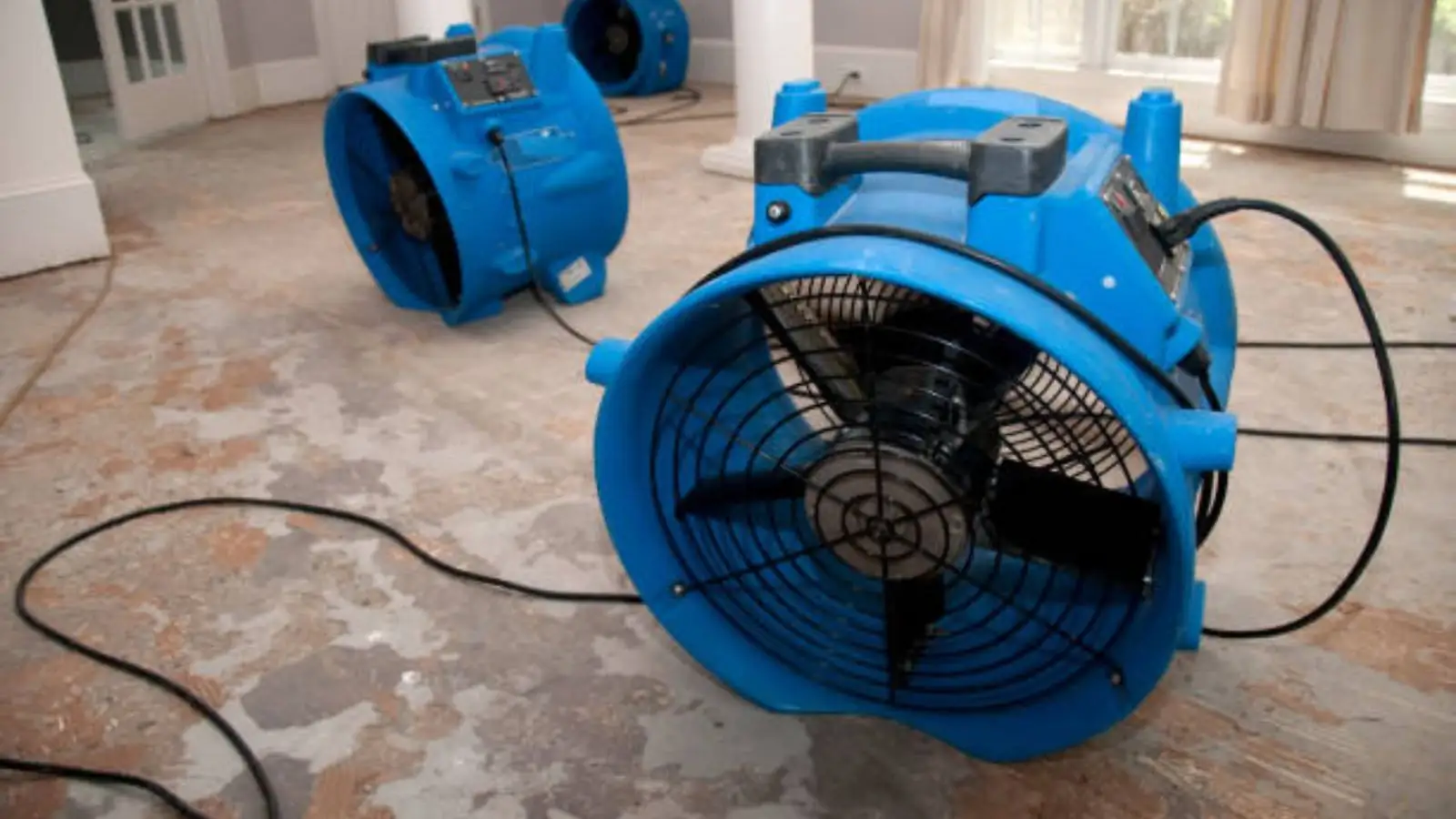
How carpet water damage starts in Grapevine homes
Carpet water damage in Grapevine, TX usually begins with something ordinary: a washer hose that lets go, an overflowing toilet, a slow roof leak or a water heater that splits in a closet. North Central Texas has a humid subtropical climate, so wet fibers also face warm, damp air that slows natural drying.
Carpet itself is only the top layer. Below it sit a foam or fiber pad, tack strips along the walls and a subfloor of plywood or concrete. Water moves through all of them, and the pad usually soaks up the most.
What the wet spot is telling you
Different signs point to different problems under the carpet.
| What you notice | What it usually means |
|---|---|
| Squishy feel when you step | Pad is saturated and holding water against the subfloor |
| Dark ring or stain at a wall edge | Water wicked up from the baseboard, often from a wall leak |
| Musty smell with a dry surface | Moisture trapped in pad or subfloor for more than a day or two |
| Rippling or loose carpet | Backing and glue have softened and the carpet is lifting |
| Rusty tack strips | Water has been present for some time |
Safety steps for the first hour
Do these before you worry about the carpet.
- Shut off the water at the fixture valve or the main valve.
- If water reaches outlets, cords or the panel, stay out and call the electric utility or 911 before calling us. Cut power only from a dry, reachable panel.
- Lift furniture legs onto foil or blocks so wood stain and rust do not bleed into the fiber.
- Move rugs, shoes and electronics to a dry room.
- Photograph the wet area, the source and any labels on damaged items.
Save the carpet or replace it
The deciding factor is the water category. Clean supply water that is caught within a day gives the carpet a real chance, while sewage or creek water means the carpet and pad go. Pad is usually discarded either way because it is cheap to replace and slow to dry.
Carpet that is saved is lifted from the tack strip, supported on a drying mat or air flow and re-stretched afterward. Looped berber can wick moisture up through its backing, and cut pile tends to release water more easily, though the readings decide, not the style.
How we dry carpet, pad and subfloor
The steps follow the published ANSI/IICRC S500 reference standard and change with the water category.
- Extract standing water with portable extraction units and weighted tools that press water out of fiber.
- Scan carpet, tack strip and subfloor with moisture meters and a thermal imaging camera.
- Remove and bag the wet pad and cut away any section of carpet that cannot be saved.
- Float the carpet edge on a drying mat or air channel so air reaches the backing and subfloor.
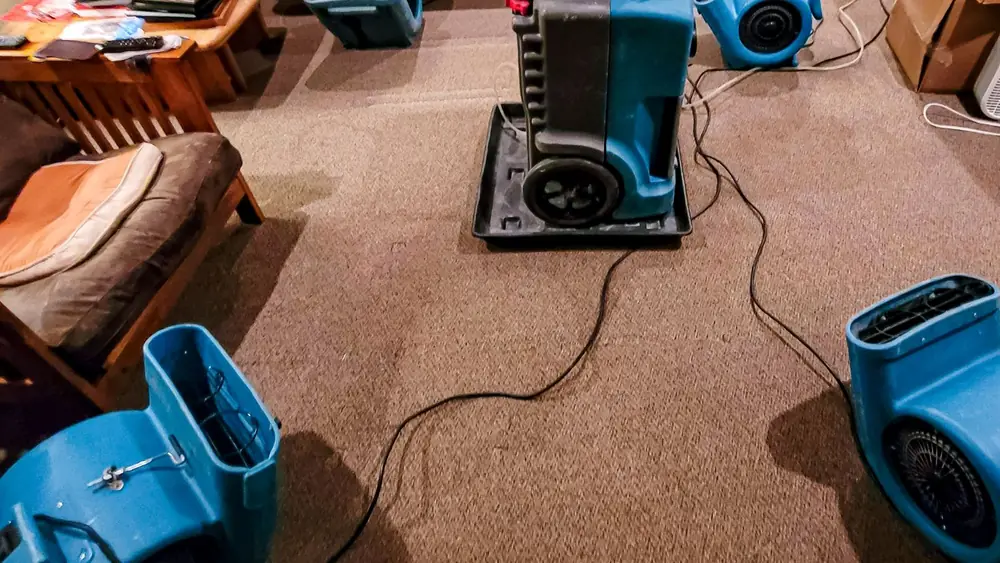
- Run air movers and LGR dehumidifiers, usually 24 to 72 hours, and recheck readings daily.
- Re-stretch and re-lay saved carpet only after the subfloor tests dry.
Damp pad hidden under a sealed room can grow odor in a day or two, so speed matters more than the fiber type.
Describe the wet carpet to a dispatcher
Tell us the room, the source and how long it has been wet. Scope and price are explained before work starts.
What changes the cost of carpet restoration
Cost follows the water category, the square footage that is wet, the carpet and pad type, how many days drying equipment runs and how much tear-out is needed. Stairs, tight closets and glued-down carpet add access work.
Before any carpet work begins, the dispatcher walks through what the job includes and what it will cost, and you can ask about any line.
Insurance and wet carpet
Texas Department of Insurance guidance says most policies exclude gradual leaks and seepage, which matters when carpet has been damp for weeks. A sudden break is treated differently from a slow drip, and flood water needs separate flood coverage.
Ask your insurer what your policy says and keep dated photos and moisture readings. We do not promise how a claim will be decided.
Grapevine local note: carpet work and the building department
The City of Grapevine's building services FAQ lists carpeting among the work exempt from permits, though the list is not all-inclusive. Replacing carpet after a loss usually needs no permit, but if walls or plumbing were opened, ask the building inspection department about that part.
The Texas Department of Licensing and Regulation licenses mold assessment and remediation under Chapter 1958 of the Occupations Code. If a musty smell turns out to be growth in the subfloor, ask any mold company for its TDLR license number and verify it with the state.
Carpet mistakes to avoid
Do not run a household vacuum on wet carpet, and do not cover a damp floor with new padding. Skipping the subfloor check is the costly one, because dry-looking carpet can sit over wet plywood. A plumber fixes the leak source, and our crew handles the drying. After the pad is out, water mitigation covers the structural drying, and water damage repair covers the rebuild.
Where we work and what comes next
Crews cover Grapevine and travel to Colleyville and Southlake. If the water is still standing, see emergency water removal, and if growth has started, read about mold remediation.
Wet carpet questions in Grapevine
Yes. Our line is answered 24 hours a day. Same-day response is offered when crew availability allows, and we do not promise an arrival time.
Often, when the water was clean and the carpet is reached fast. The pad is almost always replaced, and the readings on the carpet and subfloor make the final call.
Odor can start within a day or two if pad stays wet. That is why pad is pulled early and the subfloor is dried to a meter reading.
Saved carpet is re-stretched and re-laid, which usually restores the fit. Seams and old stain lines can show, so a patch or a replaced section is sometimes the cleaner result.
No. Lifting it without tools can tear the backing or leave tack strips exposed. Leave it for the crew, and just move furniture and valuables off the wet area.