
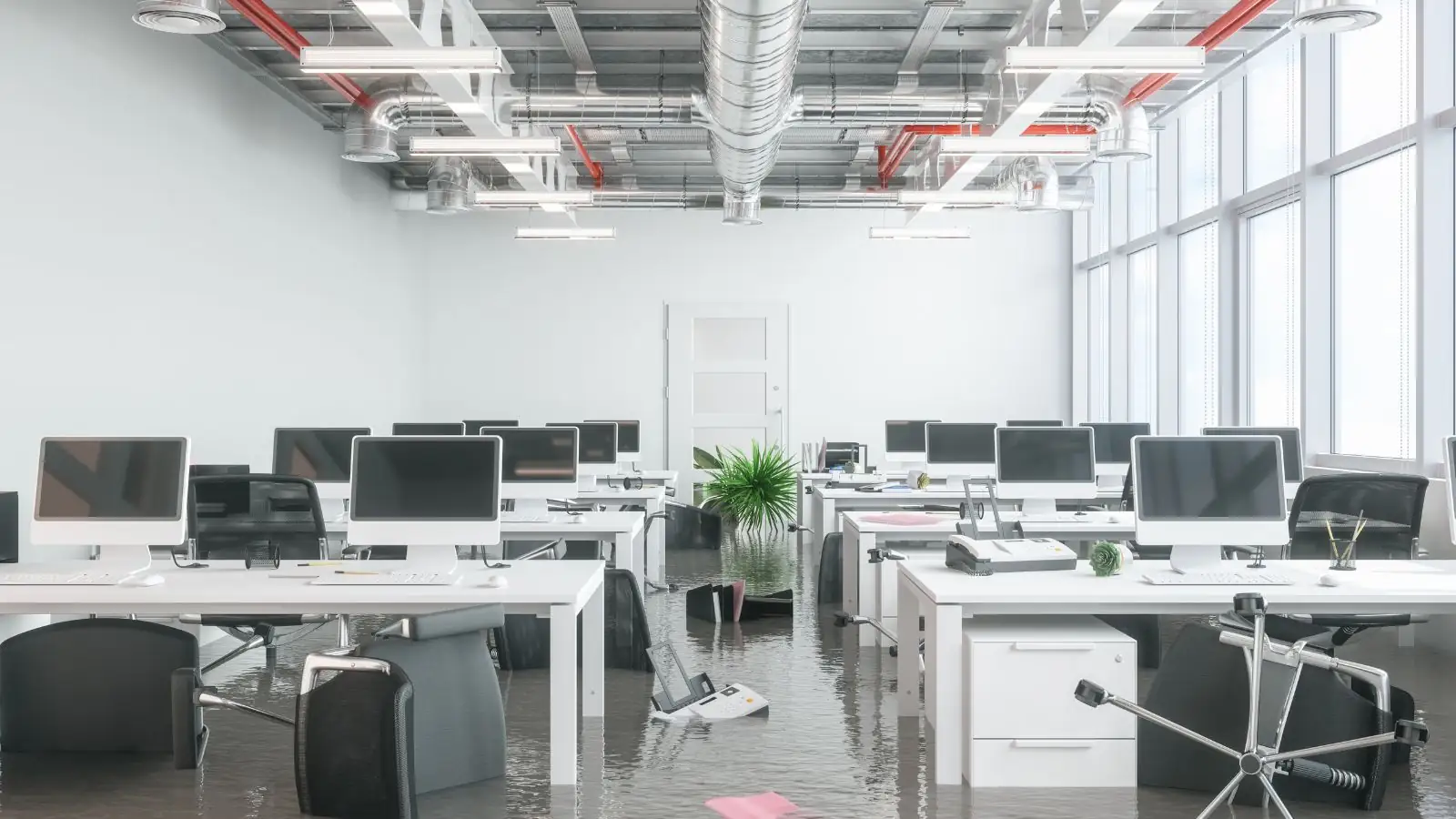
What commercial water damage looks like in Grapevine, TX
Commercial water damage in Grapevine, TX is any uncontrolled water release inside a commercial building, suite or shared space. Common sources are a failed supply or drain line, a discharged sprinkler head, an overflowing fixture in a shared restroom and a roof or wall opening that lets storm water in.
Commercial construction changes how the water behaves. Water runs along concrete floors, wicks into metal-stud walls and drops through ceiling tiles into the space below. A leak in one suite can reach the neighbor through a shared wall.
Where the water usually comes from
Knowing the source tells the crew what to open and who needs a call.
Supply or drain line
Pressurized lines in ceilings and chases leak slowly at joints, then fail at a fitting and soak ceiling tile and carpet tile.
Sprinkler discharge
A damaged or tripped head releases a high volume of water in minutes, often across an entire floor plate.
Roof or envelope opening
Storm water through a membrane seam, curtain wall or door threshold wets insulation before a stain appears.
Neighboring unit
Water from above or beside a space arrives through shared walls.
First-hour safety steps for a flooded commercial space
These steps protect people first and the building second.
- Clear everyone from areas with standing water near outlets, panels or powered equipment, then call the electric utility or 911 before you call us.
- Cut power to the affected area only from a dry panel you can reach without stepping in water.
- Close the nearest water shutoff, or ask the property manager to close the building riser if the source is not clear.
- Do not touch a flowing sprinkler system yourself. Tell the manager and the fire system contractor right away.
- Move inventory and files onto shelving, and photograph the damage first.
How we dry a building without stopping the business day
Every job starts with a walkthrough, and the scope is planned around how the space is used.
- Map moisture in concrete, drywall, ceiling grid and wall base using moisture meters and a thermal imaging camera.
- Extract standing water with portable and truck-mounted extraction units, routing hoses to keep exits and walkways clear.
- Remove wet ceiling tile, insulation and wall base, and use containment barriers to keep dust off unaffected areas.
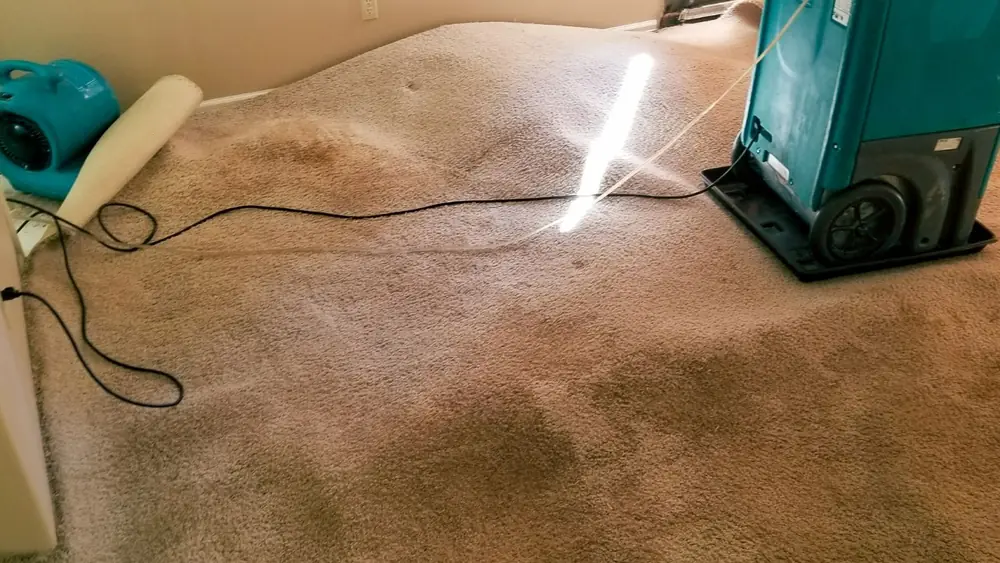
- Set air movers and LGR dehumidifiers, and add HEPA air scrubbers when demolition creates airborne debris.
- Log readings at each visit and move equipment until the materials reach their dry targets.
Our crews work to the published ANSI/IICRC S500 reference standard. After-hours and weekend visits can be arranged so equipment is set while the space is closed.
Need a plan that fits your hours?
Describe the space and the schedule. We explain the scope and price before work starts.
Records that owners, managers and adjusters ask for
A commercial loss usually has several readers. The owner wants to know what failed, the property manager wants to know what else is affected and the insurer wants proof of the timeline. Dated photos, moisture readings by room and an equipment log serve all three.
We keep those records as the job moves, from the first walkthrough to the final dry reading.
Owner, tenant or manager: who decides what
In general terms, the lease and the building rules decide who can authorize work. A tenant often controls the interior of the suite, while the owner or manager controls the roof, risers, shared walls and common areas. Read your lease and ask the manager before equipment goes into a shared space.
If the source sits in a space you do not control, notify the manager in writing and photograph the damage on your side.
What changes the cost of a commercial dry-out
Cost depends on the water category, the square footage that got wet, the materials involved, the days of equipment time and how much demolition the wet materials require.
Access and after-hours scheduling also matter. Scope and price are explained before work starts.
Insurance for a commercial water loss
A commercial property policy often responds to sudden water releases such as a burst line or a discharged sprinkler head, and may treat slow leaks differently. The owner and tenant may each carry their own policy. Check your policy and ask your insurer who reports what.
Report promptly and keep damaged items until the adjuster has seen them. Claim decisions belong to your insurer.
Grapevine local note: permits, sprinklers and flood coverage
The City of Grapevine's building services FAQ lists a turnaround goal of 10 working days for commercial alterations. If drying leads to a wall rebuild or layout change, ask the building inspection department early so your reopening date accounts for that review window.
The City of Grapevine Fire Marshal's Office FAQ says fire alarm and sprinkler work require permits, and the office is on Ira E. Woods Avenue. So a repaired sprinkler head or pipe is a job for a licensed fire system contractor, and the manager should confirm the permit before the system returns to service.
The FEMA Flood Map Service Center lets anyone look up an address, and standard commercial property policies exclude flood. Grapevine Lake sits on the north side of the city, so check the map for your address and ask your agent about a separate flood policy before you need one.
Mistakes to avoid after a commercial leak
The costliest mistake is waiting for a convenient time. Wet drywall and ceiling grid keep absorbing moisture, and mold needs moisture to grow, which is why materials that stay wet past 24 to 48 hours invite trouble.
For cleanup of ruined finishes, see water damage cleanup, and if musty odor appears later, mold remediation is the next step.
Commercial work across our service area
We work in Grapevine and in nearby Southlake and Flower Mound. Larger losses that spread through a structure fall under water mitigation, and the full list sits on the services page.
Commercial water damage questions in Grapevine
Yes. We answer the phone around the clock and send a crew the same day when availability allows. We never promise an arrival time, so close the nearest shutoff and clear the area while you wait.
Often yes. We plan equipment placement, hose routes and demolition around your hours, and after-hours visits can be scheduled for noisy or disruptive steps.
No. A licensed plumber or fire system contractor repairs the source. We extract water, dry the structure and document the moisture readings.
Dated photos, moisture readings by room and an equipment log from each visit. These records help the owner, the manager and the insurer see the same timeline.
Many rooms dry in 3 to 7 days, and concrete or layered flooring can take longer. Meter readings decide when equipment leaves.